Rajasthani wedding invitation: palace, haveli and Marwari card traditions
A Rajasthani wedding invitation is bright, generous and full of family. Expect deep red, saffron and pink, Lord Ganesh at the top, peacocks and palace arches, and a long list of every function from Vinayak puja to the reception. Below we explain the colours, motifs and Marwari card conventions, and show two designs, Sheesh Mahal and Haveli Darwaza, that you can try with your own names in a minute.
By the Gulabi Card team · Published 6 October 2026
The colours of a Rajasthani wedding card
Rajasthan dresses in colour because so much of the land is sand and stone. Wedding invitations follow the same instinct. Red (lal) is the colour of the bride and of suhaag, so it almost always appears. Saffron and turmeric yellow are the colours of auspicious beginnings; you see them in the pithi ceremony and in the marigold torans over every door. Pink belongs to Jaipur, the Pink City, and to the safas of the groom's side. Deep indigo and royal blue come from block-printed textiles and the blue houses of Jodhpur, and they make warm colours glow.
Two textile patterns turn up again and again on Rajasthani cards: leheriya, the diagonal wave stripes tie-dyed for the monsoon, and bandhej (bandhani), the tiny dots of tie-dye worn by brides and mothers. A card with a leheriya border or a bandhej background reads as Rajasthani at a glance, even before anyone reads a word.
Motifs you will recognise
Lord Ganesh and the kalash: the invitation opens with Shri Ganeshaya Namah, a small Ganesh, or a kalash with mango leaves and a coconut.
Peacocks: the state bird and a symbol of love and the monsoon. A pair facing each other above an arch is a classic layout.
Jharokhas and mehrab arches: the carved balconies and pointed arches of palaces and havelis frame the names and the programme.
Elephants, horses and the doli: the procession, the groom on his mare and the bride's palanquin.
Mirror work (sheesh): small mirrors in embroidery, and the mirror halls of forts such as Amer, which give a card that glittering, lamp-lit feel.
How a Marwari wedding card is written
Marwari families have a recognisable way of writing a wedding card, often called a kumkum patrika. The details vary from family to family and between Marwari, Maheshwari, Agarwal, Oswal and other communities, but most cards follow a familiar order:
Invocation: Shri Ganeshaya Namah or a Ganesh shloka, sometimes the name of the kul devta or kul devi.
The invitation itself, usually in the name of the eldest of the family, with the parents named as hosts, and the bride and groom described by their parents and grandparents.
The programme (karyakram or mangal prasang), with every function, date and time listed.
Darshanabhilashi or swagat-karta: a long list of uncles, aunts, brothers and cousins who "look forward to your presence". Leaving someone out can hurt feelings, so this list is checked carefully.
Bal manuhar: a playful line from the children of the family, such as "मेरे चाचू की शादी में ज़रूर आना" (do come to my uncle's wedding).
Family business (pratishthan) names and the home address at the end.
A wedding website keeps this structure but removes the space problem. The invocation and the main invitation go on the first screen, each function gets its own page, and the full family list fits without shrinking the type. If you need Hindi wording, our free wedding card matter generator gives you a starting point you can edit.
Rajasthani and Marwari wedding functions, explained simply
Outstation friends and younger cousins often don't know what each function means. A line of explanation on each function page helps them know when to come and what to expect.
Vinayak or Ganesh puja
The first function. Lord Ganesh is invited before anyone else, and in many homes the first card is placed before him. Everything after this is considered begun.
Ban (Baan) and pithi
A few days before the wedding the bride or groom 'sits in ban': turmeric paste (pithi) is applied, and from then on they are expected to stay home and rest. Relatives often host them for a meal and a small procession, called bindori.
Mayra (Bhaat)
The mother's brothers and their families arrive with clothes, jewellery and gifts for their sister's family. The mother invites them personally, and the mayra is one of the most emotional moments of a Marwari wedding.
Mehendi and mahila sangeet
Mehendi for the bride and the women of the family, often with an evening of songs and dance.
Nikasi
The groom leaves home for the wedding, usually on a decorated mare, and the baraat begins.
Toran, varmala and pheras
At the bride's door the groom touches the toran (a decorated wooden arch) before entering; then the varmala and the pheras around the sacred fire.
Bidai and reception
The bride leaves for her new home; many families add a reception a day or two later.
Customs differ between families, villages and communities, and even the names change (bhaat or mayra, ban or tel-baan). Ask the elders of your family how your side does it, and write it that way on your invitation.
Rajasthani wedding invitation designs you can try
Every Gulabi Card design is a full invitation website for ₹2,000, with a page for every function, Google Maps, RSVP, music, a countdown and an optional voice message from your parents. These two were painted with Rajasthan in mind.
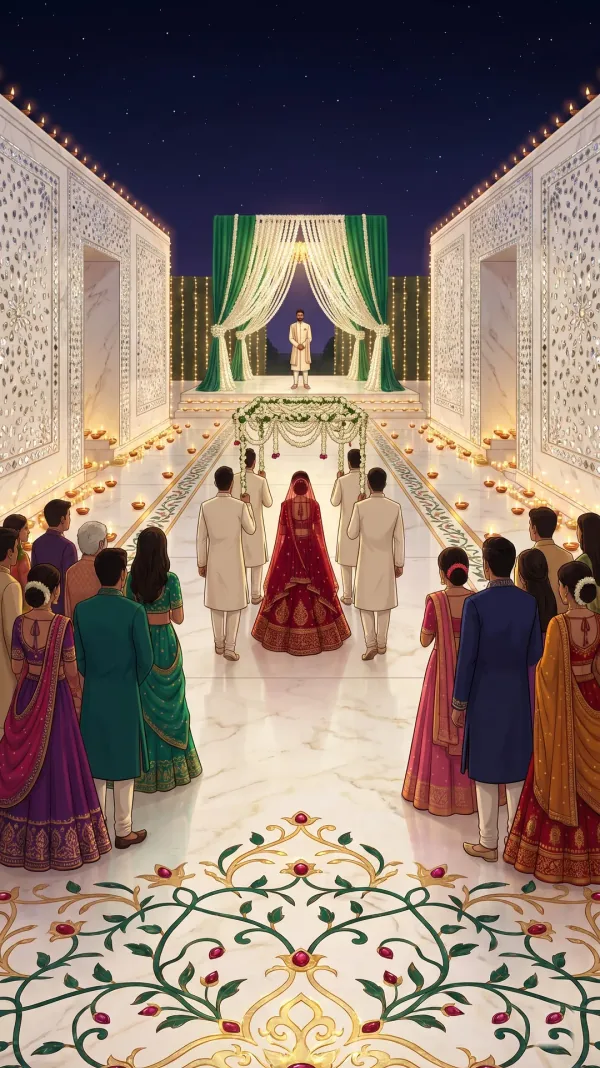
Rajasthani palace night scene with mirror work · ₹2,000
A night wedding in a palace of mirrors: a white marble aisle lined with diyas, mirror-inlaid walls and the bride walking under a canopy of jasmine. The most royal of our designs, made for evening pheras, winter weddings and Udaipur or Jaipur destination weddings.
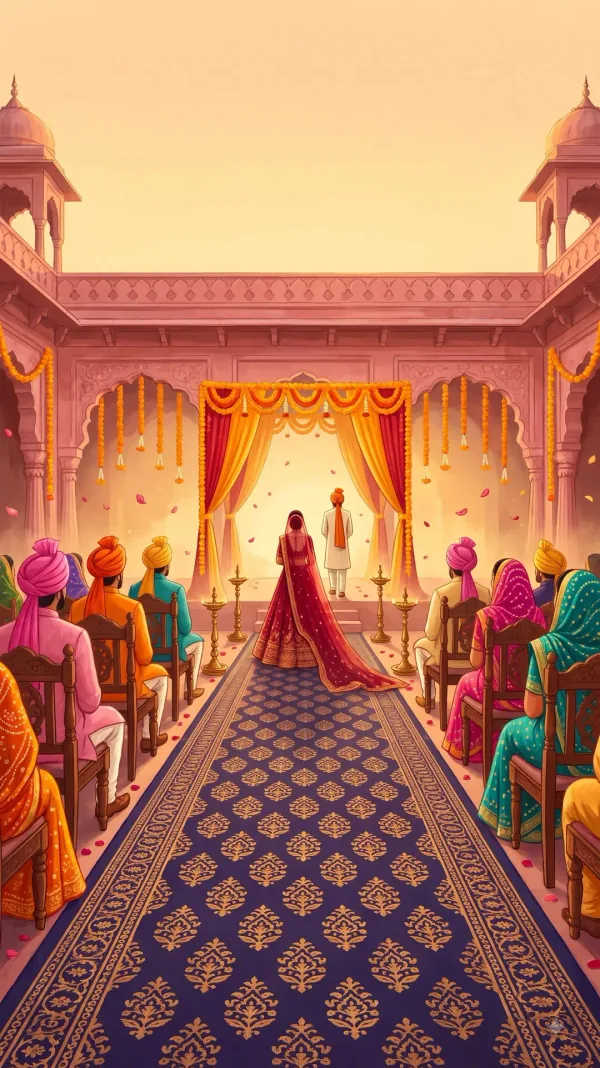
The family haveli opens its doors: pink sandstone, jharokhas, marigold torans and an indigo block-printed carpet to the mandap. Warmer and more homely than Sheesh Mahal, with arched inner pages that comfortably hold a long darshanabhilashi list.
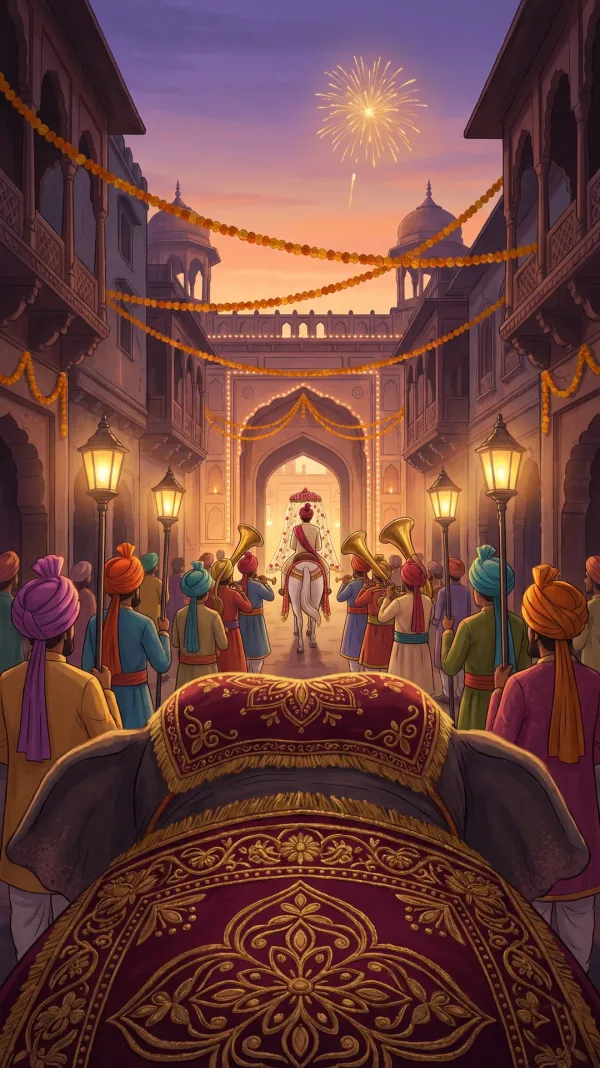
Illustrated North Indian baraat procession · ₹2,000
If the groom's family is inviting, Baraat puts guests on the procession itself: a band in bright safas, the groom on a white mare and fireworks over the old city. Give the nikasi its own page with a meeting point and a map.
Many Marwari families still print a small number of cards for the mandir, elders and close relatives, and send a website link to everyone else on WhatsApp. That keeps the tradition of the first card while saving on printing and courier for hundreds of guests, and the website can be updated if a time or venue changes. Our guide to wedding invitation costs in India works through the numbers, and the invite cost estimator does it for your own guest list.
A short checklist before you send
Ganesh invocation and kul devta name checked with the elders.
Every function listed with date, time and venue; ban and mayra dates confirmed with both families.
Darshanabhilashi list read out loud once, so nobody is missed.
One contact number per side for guests who need directions.